Can One Sustainable Flooring Plan Work for Your Whole Home?

We see this moment all the time in full-home remodels: a homeowner is standing over flooring samples, picturing one beautiful surface running from the living room through the kitchen and down the hall, and then the practical questions start crashing in. What happens when the bathroom gets daily steam, the kitchen gets spills, the dog runs in from outside, and an older subfloor turns out to be less level than anyone hoped?

The short answer is yes, one sustainable flooring plan can often cover most of a home, but a fully uniform material in every single room is usually not the smartest move. In real renovations, the best result is often one dominant flooring strategy across the main dry living spaces, paired with intentional exceptions in bathrooms and, in some homes, the kitchen. That approach protects the cohesive look people want without forcing an eco-friendly material into conditions where it is more likely to fail early.

Whole-Home Remodel Planning
Not sure where one flooring material should stop and another should start?
EcoStar helps homeowners plan flooring choices alongside subfloor prep, waterproofing, cabinetry, and transitions—so your home feels cohesive and performs well room by room.

Get Remodeling Guidance

Choosing sustainable flooring for one room is manageable because the decision stays contained. Choosing it for an entire house is different. Suddenly, the flooring is not just a finish choice. It affects transitions, door clearances, cabinet heights, trim details, subfloor prep, and how the home feels from one room to the next.

In Southern California homes, we also have to plan for mixed conditions. A hallway, family room, and bedroom may stay relatively dry and predictable, while bathrooms deal with regular moisture and kitchens absorb splashes, dropped ice, pet bowls, and heavy daily traffic. Add in indoor-outdoor living, older wood subfloors, patched slabs, or past water damage, and the idea of one perfect material for every room starts to look less realistic.

That does not mean a cohesive whole-home plan is impossible. It means the plan has to be built around performance first, then design continuity. When we approach flooring that way, homeowners usually end up with a result that looks more intentional and lasts much longer.

A lot of flooring discussions stop at whether a material is renewable, recycled, natural, or low-VOC. Those factors matter, but they are only part of the decision. In a real family home, practical sustainability also means asking whether the floor will hold up long enough to avoid premature replacement.

A sustainable floor is not just one with a good environmental story on paper. It is one that fits the room, tolerates the home’s moisture conditions, can be maintained without constant stress, and is unlikely to be ripped out in a few years because it swelled, stained, cracked, or wore down too fast. Longevity matters. Repairability matters. So does installation quality. An eco-minded product installed over a problem subfloor can become a less sustainable choice if failure comes early.

That is why we encourage homeowners to think in layers. Material sourcing and indoor air quality are important, but so are surface durability, water tolerance, maintenance burden, refinishing potential, and compatibility with the structure below. The most responsible choice is often the one that balances all of those instead of chasing a single green label.

What can work through most of the house

For living rooms, hallways, bedrooms, and other dry areas, a few sustainable flooring categories tend to rise to the top. Engineered hardwood with responsibly sourced wood can make sense when homeowners want a natural look, warmth, and long service life, especially if the home’s subfloor conditions are stable and the finish selected fits family wear. It brings visual continuity beautifully across open-plan spaces, but it still needs respect around moisture.

Bamboo is often considered for the same reason: it can deliver a wood-like appearance with a more renewable source story, depending on the product. But bamboo is not automatically the right answer just because it sounds eco-friendly. Quality varies, and performance still depends on core construction, finish durability, and whether it is being asked to handle water exposure beyond what it should.

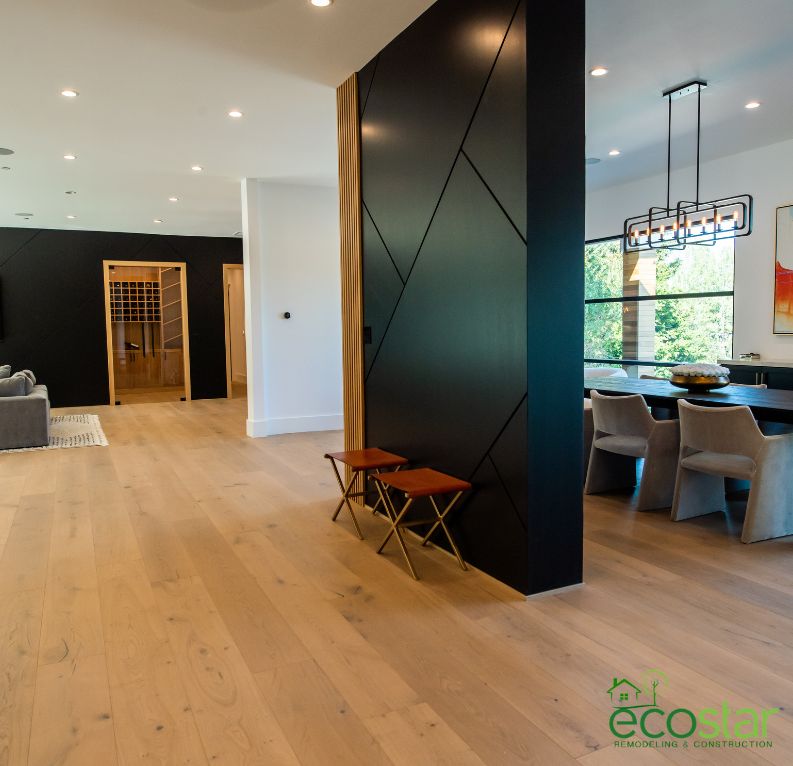
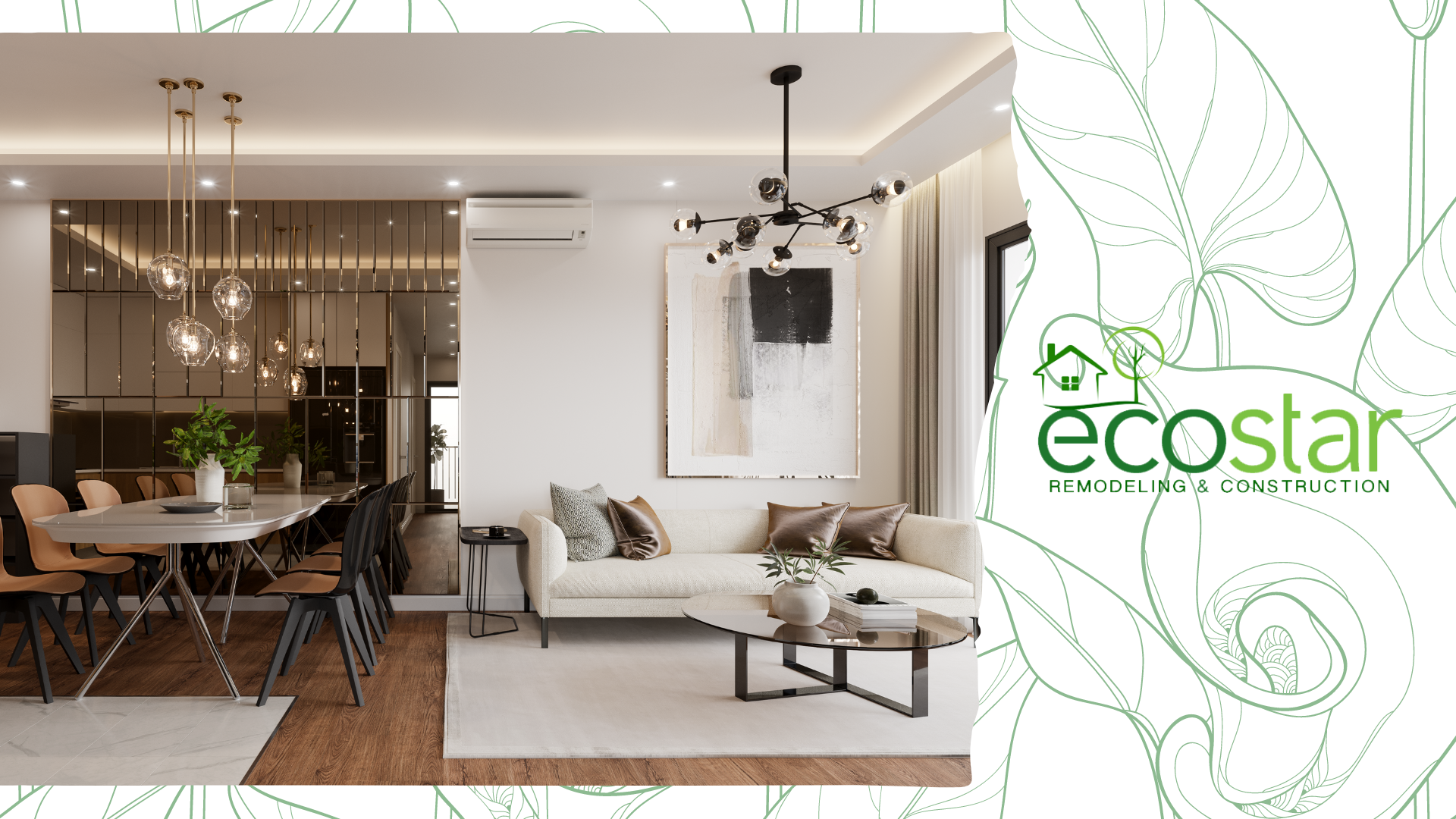
Open-plan home interior with wood flooring running continuously through the living area and hallway.

Cork can be appealing for comfort, sound absorption, and sustainability goals, especially in quieter dry zones. It feels softer underfoot than many harder surfaces, which some families love. But it is more of a deliberate lifestyle choice than a universal answer. It needs careful thinking around dents, standing moisture, and maintenance expectations.

Linoleum, the real material rather than sheet vinyl marketed in casual conversation, deserves more attention than it gets. It has a strong sustainability story and can perform well in many parts of the home when specified correctly. Its look is different from wood, though, so it tends to suit homeowners who are open to a broader design language rather than trying to mimic continuous hardwood throughout.

The key point is this: the best candidate for most of the house is usually the one that can handle the majority of your dry living spaces with the least compromise. That does not mean it should automatically be forced into bathrooms or every kitchen. It means it gives you a durable, low-stress backbone for the home.

Where the plan usually needs to change

Bathrooms are where many one-material dreams run into reality. Daily steam, wet feet, splashes near tubs and showers, and the possibility of leaks make bathrooms a high-risk place to insist on continuity at all costs. Even attractive sustainable materials that behave well in bedrooms or family rooms may not be the best fit here.

In many remodels, tile becomes the practical exception, including options with recycled content or long service life that align with sustainability goals through durability. The reason is not trend-driven. It is building-science driven. Bathrooms reward materials that can tolerate moisture exposure and work well with waterproofing systems and detailed transitions.

Kitchens are more nuanced. Some kitchens can share the main flooring if the household is careful, the product is appropriate, and the design team has planned for spills, appliance areas, and traffic patterns. In other homes, especially busy family homes with frequent cooking, pets, kids, or a history of water incidents, the kitchen may benefit from a more moisture-tolerant material. The right answer depends less on aesthetics than on how the space is actually used.

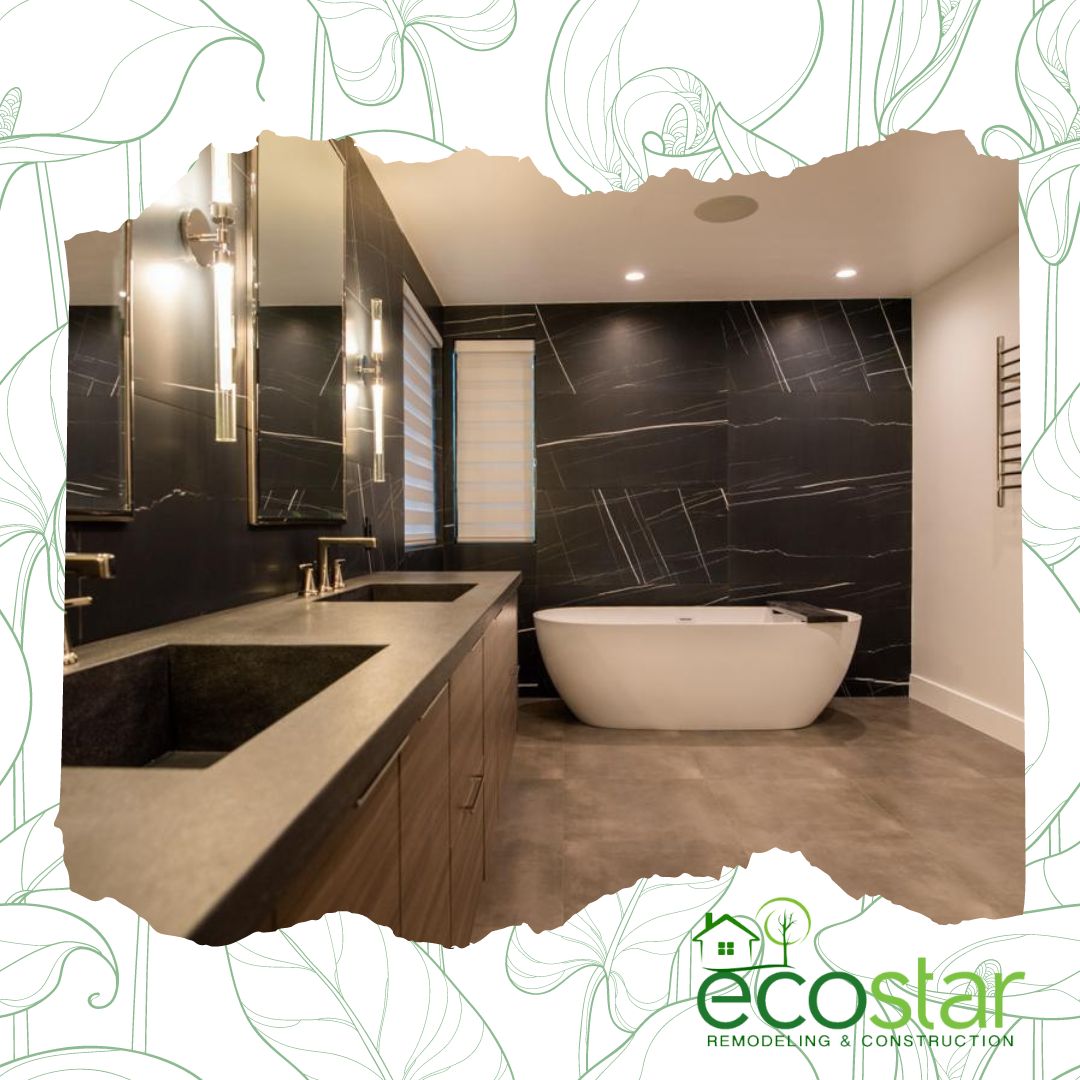
Modern interior showing durable tile flooring in a bathroom or kitchen with a clean transition to adjacent flooring.

This is where false economy shows up. A material may sound sustainable because of its composition, but if it struggles in a splash-prone kitchen or damp bath and has to be replaced early, the total outcome is worse for both budget and waste. Practical sustainability means putting each material where it has a realistic chance to stay in service.

How to keep the house cohesive without forcing identical flooring everywhere

Homeowners often worry that changing flooring in bathrooms or part of the kitchen will make the home feel chopped up. In practice, that only happens when the changes are made late or without coordination. A house can feel calm and continuous even when every room does not use the exact same flooring construction.

We usually think about continuity through design language, not strict sameness. Tone matters. Texture matters. Plank width, grout color, surface finish, and threshold details all shape whether the eye reads the home as unified. A warm wood-look field flooring can pair with a bathroom tile in a similar undertone. A kitchen transition can feel intentional if the heights are managed properly and the shift happens at a logical architectural line.

Good continuity also comes from restraint. If the main flooring carries a consistent visual rhythm through living areas and bedrooms, then a purposeful wet-zone material does not feel random. It feels protective. In many cases, that is the more sophisticated result because the home is not pretending every room behaves the same way.

A quick way to narrow the options

If you are trying to decide which sustainable flooring options deserve serious consideration, this simple checklist is a better starting point than chasing a single “best” material.

  • Engineered hardwood: Strong candidate for living areas, halls, and bedrooms; sometimes workable in kitchens; usually not ideal for full bathroom coverage.
  • Bamboo: Can work through many dry spaces; kitchen use depends heavily on product quality and household habits; generally a weaker choice for bathrooms.
  • Cork: Comfortable and quieter underfoot in dry zones; less ideal where standing moisture, dents, or heavy wear are major concerns.
  • Linoleum: Good sustainability profile and broad room potential when properly specified; better for homeowners open to its distinct visual character.
  • Tile: Usually the safest call for bathrooms and strong in kitchens; less often the preferred whole-home solution if warmth underfoot is the priority.
  • Best whole-home strategy: One dominant material for dry spaces, with planned wet-zone exceptions where moisture tolerance matters more than sameness.

Why flooring has to be chosen earlier than most homeowners expect

One of the biggest remodel mistakes we see is treating flooring like a late decorative decision. By that point, cabinet layouts may be fixed, appliances selected, bathroom waterproofing underway, and trim details already moving toward fabrication. Flooring should be part of the planning conversation much earlier.

That is because flooring affects more than color and texture. It influences subfloor repair strategy, leveling requirements, underlayment choices, bathroom build-up, transition heights, baseboard details, stair noses, and sometimes even how doors swing and clear the finished floor. If the home has old slab cracks, uneven framing, or prior water damage, those conditions need to be understood before the material is finalized.

Sequencing matters too. In a whole-home renovation, flooring interacts with cabinetry, vanities, islands, thresholds, and waterproofing layers. A product that looks great in a showroom may require more prep than expected once the existing house is opened up. Planning ahead protects the schedule and helps avoid expensive changes after finish materials are already ordered.

This is one reason a coordinated design-build process matters so much. When the same team is thinking through design intent, room use, subfloor conditions, and installation order together, it is easier to choose a sustainable flooring plan that works in the real house instead of just on a sample board.

Common edge cases homeowners ask us about

What if we have kids and pets?

Then durability and maintenance need to carry more weight in the decision. Scratches, spills, tracked-in grit, and frequent cleaning can shorten the life of a floor that is technically sustainable but too delicate for the household. In many busy homes, that pushes us toward tougher main-area flooring and more conservative wet-zone choices.

Can sustainable flooring really hold up long term?

Yes, when the material is matched to the room and installed correctly. Long-term performance depends less on marketing language and more on fit: moisture tolerance where needed, realistic wear resistance, good subfloor prep, and a household willing to maintain the floor appropriately.

What if the home has old water damage or uneven subfloors?

That should be addressed before product selection is locked in. Older homes often hide issues that affect how flooring performs, from patched plywood to slab irregularities. If those are ignored, even a high-quality sustainable floor can fail prematurely.

Should the kitchen always match the rest of the house?

Not always. Some kitchens can share the main flooring successfully, especially in households with lighter moisture exposure and careful maintenance habits. But if the kitchen functions more like a high-splash, high-traffic work zone, a planned material change may be the better long-term decision.

Is low-VOC enough to make a floor the right choice?

No. Low-toxicity goals are important, but they should be weighed alongside lifespan, repairability, moisture resistance, and maintenance. The best choice is the one that supports healthy indoor air and realistic durability at the same time.

What we recommend for a full-home plan

For most homeowners, the smartest path is not chasing one identical material across every room. It is choosing one sustainable flooring approach that performs well through the main dry living spaces, then making planned exceptions where moisture, spills, or subfloor realities call for something more protective. That gives you the cohesive feel people want without risking premature failure in the rooms that are hardest on floors.

If you are remodeling an older Southern California home, that decision is even more important because flooring is tied to subfloor prep, waterproofing, transitions, cabinetry, and long-term maintenance. We help homeowners sort through those tradeoffs early, so the result feels consistent, functions well, and holds up to real family use. When the goal is a whole-home renovation that is both sustainable and practical, a coordinated plan is what protects the investment.

EcoStar Remodeling & Construction
Build a sustainable flooring plan that works in real life
If you’re remodeling an older home, flooring decisions affect moisture protection, transition heights, subfloor repairs, and long-term durability. EcoStar can help you create a practical whole-home plan that fits your layout, lifestyle, and renovation goals.

Book a Consultation

EcoStar Remodeling & Construction

EcoStar Remodeling & Construction has been delivering trusted, high-quality home renovations since 2010. From kitchens to full home remodels, we bring craftsmanship, care, and lasting value to every project.

Opening Hours

Main Headquarters in
Los angeles

Dallas Office

Bay Office

Seattle Office

Opening Hours

Monday – Thursday8:00AM – 7:00PM
Friday:8:00AM – 2:30PM
Saturday:Closed
Sunday:8:00AM – 7:00PM