
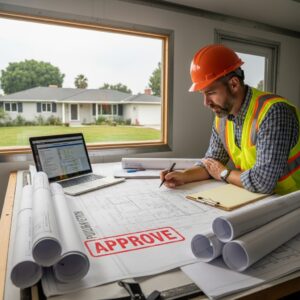
Quick comparison checklist
- Confirm permit responsibility in writing
- Ask which trades are covered
- Verify LADBS process handling
- Confirm who attends inspections
- Ask how correction notices are resolved
- Review exclusions and change orders
A full-service package should be easy to compare in phases: discovery and site evaluation, design or design coordination, scope development, budgeting, permit set preparation, engineering as needed, permit submission, procurement and material selections, construction, inspection coordination, punch list, and final walkthrough.
That is different from a cosmetic-only scope. Once a project affects layout, systems, structure, energy performance, or habitability, it generally moves beyond finishes and into a more regulated whole-home renovation category.
Ask for these line items in writing: who prepares plans, who responds to plan check comments, who handles permit fees, who schedules rough and final inspections, who resolves corrections, and who provides closeout documentation. Common trades may include demolition, framing, electrical, plumbing, HVAC, roofing, insulation, drywall, flooring, windows, painting, and finish carpentry.
Strong packages also define communication expectations: a dedicated project manager, schedule updates, inspection milestones, and a written change-order process. That end-to-end coordination is the practical value of firms like EcoStar, which can guide projects from design through final walkthrough and inspections without making the homeowner manage every handoff.
Which renovation projects need permits and inspections in LA?
Many full home renovations do require permits in Los Angeles. Using local terminology, that often means LADBS plan check, permit issuance, rough inspection, final inspection, and documented code compliance.
Permits are commonly required for additions, structural changes, wall removal, major kitchen and bath reconfigurations, electrical upgrades, plumbing relocation, HVAC changes, roofing in some cases, foundation work, window or door changes depending on scope, and ADUs. Minor finish updates may not require permits, but homeowners should not assume; scope determines requirements. For local accuracy, it is best to check current City of Los Angeles and LADBS guidance directly.
Typical inspections may include foundation or slab where applicable, framing, rough electrical, rough plumbing, rough mechanical, insulation, drywall or lath where applicable, and final inspection. In Los Angeles, seismic and structural considerations are especially relevant for older homes, which is one reason structural engineering and code review matter so much. Permit requirements can also vary outside LA city limits, even within Los Angeles County.
Why permits and inspections should be included in the contractor’s scope
When permit handling is excluded or vague, homeowners may face delays, failed inspections, rework, surprise charges, uninsured or noncompliant work, resale disclosure problems, lender or insurance issues, and a much more stressful project. Plan check comments and correction notices are a normal part of many projects; the key question is who owns the response and follow-through.
That matters even more in a busy market. Harvard JCHS reported roughly $567 billion in U.S. remodeling and repair spending in 2022, which helps explain why qualified, compliance-focused contractors matter in high-demand regions like Los Angeles.
A well-defined contractor scope should explain who coordinates with designers, engineers, and trades so plans stay aligned with field conditions. If change orders come up, homeowners should review contract language, allowances, exclusions, and approval procedures carefully. The practical value proposition is simple: a company like EcoStar helps take administrative load off the homeowner through coordination, communication, and accountability.
How to compare renovation packages before signing
Use a simple bid-comparison table instead of comparing headline price alone. Score each proposal on at least these criteria:
- Scope detail
- Design responsibility
- Permit responsibility
- Inspection attendance
- Timeline assumptions
- Allowances and material selections
- Exclusions
- Warranty
- Licensing and insurance
- Change-order process
- Payment schedule
- Cleanup and final walkthrough
Request a sample scope of work, permit responsibility clause, inspection timeline, exclusions list, and sample change-order form. Also verify contractor license and insurance, and ask whether the company routinely handles LADBS submissions and inspections. Good follow-up questions include: Who speaks with plan check reviewers? Who is on site for inspections? How do failed inspections or correction notices affect cost and schedule?
Warranty is also worth comparing. EcoStar’s 2-year workmanship warranty is a useful benchmark for homeowners evaluating full-service remodelers in Los Angeles.
Red flags that a package may exclude critical compliance steps
Common red flags include “permits by owner” without explanation, “permit assistance only,” no mention of inspections, unclear engineering responsibility, unrealistically fast timelines, missing exclusions, lump-sum pricing with very little scope detail, or reluctance to put correction handling in writing.
Watch for phrases that may shift risk back to the homeowner: “subject to city requirements,” “plans by others,” “allowance TBD” without parameters, or “change orders as needed” without a defined process.
A familiar scenario in Los Angeles is a lower bid that excludes permit revisions or correction handling. The initial number looks better, but the real cost may rise later through added fees, delays, and rework. Transparency and specificity are usually stronger trust signals than the lowest price.
Special considerations after the Pacific Palisades fires: remodeling or rebuilding a burned home
For Pacific Palisades homeowners, post-fire work may mean partial restoration, major renovation after smoke or fire damage, or a full rebuild after total loss. Each path carries practical and emotional strain, so the process should be handled with clarity and restraint rather than sales language.
Crosstown reported that the January 2025 Palisades Fire destroyed nearly 7,000 structures, and that rebuilding has still faced permitting bottlenecks despite streamlining efforts. Its reporting, drawing on Crosstown and LADBS-related permit data, also noted an average wait time of about 49 days across Palisades-related permit types. That does not define every project timeline, but it does show why process management matters.
Post-fire rebuilding can add demolition clearances, structural assessment, soil or foundation review where needed, utility reconnection, updated code requirements, discussions about fire-resistant materials where relevant, and coordination across more departments than a standard remodel might involve. Homeowners should ask whether the contractor handles both rebuild planning and permit/inspection follow-through, including correction responses and department coordination.
This is also where EcoStar may be relevant for owners who want one team for major renovations, foundations, roofing, ADUs, or reconstruction-oriented scopes after a home was burned or heavily damaged.
How EcoStar’s compliance-first process fits LA homeowners’ needs
The best-fit contractor for a permit-heavy Los Angeles renovation is usually one that offers a clear scope, permit ownership, inspection coordination, correction handling, realistic timeline assumptions, transparent communication, and warranty-backed workmanship.
EcoStar is positioned around that process: owner-operated, licensed, insured, serving homeowners since 2010, with project managers guiding clients from design through final walkthrough. The company’s rare 2-year workmanship warranty and practical support with permits and inspections are useful comparison points for homeowners reviewing multiple bids.
If you are comparing renovation packages, the next step is simple: ask for a free quote or consultation, and request a written scope, permit clause, inspection timeline, and exclusions list before signing.
FAQ
Do full home renovations require permits in Los Angeles?
Often, yes. If the work affects structure, layout, electrical, plumbing, HVAC, additions, or other building systems, permits and inspections are commonly required through LADBS and sometimes other agencies depending on the scope.
What does a full home renovation package include in LA?
It should generally include site evaluation, design coordination, budgeting, permit set preparation, engineering as needed, permit submission, material selection, construction, inspection coordination, correction handling, punch list, and final walkthrough.
Should my contractor include inspections in the scope?
Yes. The scope should state who schedules inspections, who attends them, and who resolves correction notices if they arise.
Who is responsible for permit submission and plan check comments?
That depends on the contract, but the responsibility should be explicit in writing. In many full-service arrangements, the contractor or design-build team handles submissions and plan check responses.
What is a rough inspection versus a final inspection?
A rough inspection happens before work is covered, such as framing, wiring, plumbing, or HVAC. A final inspection happens near completion to confirm the finished work meets permit and code requirements.
How can I verify a remodeling contractor in Los Angeles before signing?
Check California license status through the CSLB, confirm insurance, and ask whether the company routinely manages LADBS submissions and inspections under the same legal business name.
What are common red flags in a renovation proposal?
Vague permit language, no inspection detail, unclear engineering responsibility, unrealistic timelines, missing exclusions, and open-ended change-order wording are common warning signs.
Can I remodel after a house fire in Pacific Palisades using the same contractor for permits and construction?
Yes, many homeowners prefer that approach because post-fire work may involve demolition clearances, structural review, utility coordination, multiple departments, and correction handling.
How long can permits take for major renovations or rebuilds in Los Angeles?
Timelines vary by scope and jurisdiction. Standard remodels, hillside projects, and post-fire rebuilds can move at very different speeds, which is why written timeline assumptions matter.
What should be excluded or clearly defined before I compare bids?
Engineering, Title 24 items where applicable, grading, drainage, retaining walls, utility upgrades, concealed repairs, correction handling, reinspection fees, and final closeout should all be clearly included or excluded in writing.