Per-square-foot figures are a tempting way to compare home projects, but when it comes to bathrooms in Renton, they often obscure more than they reveal. Bathrooms pack plumbing, electrical, waterproofing, cabinets, counters, glass, and tile into some of the smallest rooms in the house. Fixed steps—like mobilization, protection, demolition, permits, design, and project management—don’t shrink as much as the room size does. That’s why two bathrooms with similar footprints can have very different investment profiles. As someone who has worked across the Renton Highlands, Fairwood, and Kennydale, I’ll explain how to think about bathroom value beyond a single per-square-foot metric and how to make decisions that align with your goals. If you’re just beginning and want a grounded overview, reviewing professional bathroom remodeling services will help frame the conversation around scope and quality rather than a misleading average.
Why Per-Square-Foot Falls Short for Bathrooms
Per-square-foot pricing works best when materials and labor scale linearly with area—think flooring throughout a great room. Bathrooms are different. A powder room might be a fraction of the size of a primary bath, yet it still requires a vanity, a toilet, lighting, ventilation, and finish work. Similarly, a small hall bath that gains a curbless shower introduces complexities unrelated to size: recessed floors, drain planning, and meticulous waterproofing. The densest parts of a bathroom—shower walls, niches, and wet-area floors—demand the most skilled labor per square foot, so averages end up masking what truly drives the outcome.
Fixed vs. Variable Components
Understanding which parts of a bathroom remodel are fixed helps you evaluate proposals without relying on an average number. There are fixed steps like project setup, containment, protection paths, demolition, rough inspections, and final detailing. Then there are variable components shaped by your choices: tile type and layout, cabinet configuration, lighting layers, plumbing fixtures, and glass. A compact room with intricate tile and a custom glass enclosure can require more time and skill than a larger room with simpler finishes. Recognizing these distinctions lets you ask better questions and direct resources to the places that matter most to you.
Scope and Complexity Matter More Than Size
Two 40-square-foot bathrooms can diverge wildly depending on scope. If one keeps its layout and installs straightforward tile and a preformed shower base, while the other reconfigures plumbing and goes fully curbless with large-format tile, their per-square-foot figures will land far apart. Complexity lives in details: moving drains, adding heated floors, framing a bench, mitering outside corners, and integrating lighting controls. Even small layout shifts—like switching which side of the room the vanity sits on—can ripple into electrical, plumbing, and drywall changes that aren’t reflected in simple averages.
Material Choices and Labor Intensity
Materials influence labor as much as they affect the look. Large-format porcelain yields sleek lines but demands a flat substrate and precision setting to avoid lippage. Handmade tiles bring character but require more time to achieve consistent spacing. Natural stone may need sealing, while porcelain typically does not. Frameless glass feels light and modern but must be measured after tile and installed with careful alignment. Each choice affects not just material cost but also the hours and expertise required to install it beautifully.
Waterproofing and Ventilation: Hidden Foundations of Value
The longevity of any bathroom hinges on what you don’t see. Continuous waterproofing behind tile, properly sloped shower pans, and sealed penetrations protect your home from hidden moisture. A quiet, effective fan vented to the exterior keeps humidity in check—critical in Renton’s damp seasons. These essentials may not be the star of your inspiration board, but they define how your investment performs over time. Cutting corners here doesn’t show up in per-square-foot comparisons until it’s too late.
Layout Decisions That Outweigh Footage
Deciding to keep or move plumbing fixtures is one of the most consequential choices in any bathroom. Toilets, showers, and tubs tie into drains and vent stacks; moving them involves careful planning and sometimes structural coordination. Keeping fixtures in place focuses effort on finishes and lighting, often yielding a major transformation with less disruption. Conversely, relocating a shower to improve flow may be the right call, but it’s a scope decision, not a square-foot one. Evaluating layout in terms of function rather than size keeps priorities straight.
Primary Bath, Hall Bath, and Powder Room—Different Animals
Primary baths often combine multiple sinks, larger showers, and layered lighting with thoughtful storage. Hall baths prioritize durability and efficient use for families. Powder rooms, while small, are style-forward because they host guests and don’t contend with steam. Their investment profiles reflect these differences: a powder room’s per-foot number seems high because fixed steps are spread over a very small area, while a large primary bath can show a “lower” per-foot figure even when finishes are premium, simply because the fixed steps are diluted over more square footage.
Design Documentation Reduces Risk
Accurate plans, elevations, and specifications are the antidote to per-foot ambiguity. When your designer details tile layouts, niche sizes, sconce heights, and glass conditions, the build team can execute without guesswork. This clarity prevents rework, compresses schedules, and supports a cleaner result. In Renton, where many homes feature framing quirks or past DIY alterations, strong documentation helps the team navigate surprises gracefully.
Permits and Inspections in Renton
Many bathroom projects involve plumbing and electrical updates that require permits. Coordinating with the City of Renton for inspections adds predictable checkpoints to the sequence. Good contractors schedule these efficiently and build in drying times for waterproofing. These steps may not show up in a neat per-foot calculation, but they contribute directly to safety, performance, and long-term satisfaction.
Evaluating Proposals Without the Per-Foot Crutch
When comparing proposals, look for scope clarity and method transparency rather than a single average number. How does each contractor waterproof the shower? What ventilation capacity and duct path are planned? Are blocking and backing for accessories included? Does the plan specify tile layout patterns and glass thickness? Comparing answers to these questions yields a truer picture of value than any per-square-foot figure can provide.
How Small Choices Add Up
Small decisions cascade. Choosing a backlit mirror might eliminate the need for extra wiring and junction boxes for sconces. Opting for a quartz remnant can achieve a premium look efficiently, while a wall-hung vanity might require additional blocking but opens floor space visually. Selecting a linear drain may simplify the floor slope and tile layout. Thinking in terms of trade-offs and systems lets you invest where the experience of the room improves most.
Site Conditions and the Reality of Older Homes
Renton’s older homes sometimes reveal galvanized pipes, out-of-plumb walls, or under-vented baths once opened. Addressing these responsibly is part of doing the project right. Flattening walls for large-format tile, replacing tired plumbing during the remodel, or correcting structural irregularities are smart long-term moves. They may shift the investment profile, but they also underpin the quality of the finished space and reduce the likelihood of future repairs.
Timelines, Sequencing, and Lead Times
Bathroom projects succeed when sequencing is respected: demolition, rough plumbing and electrical, inspections, drywall, waterproofing, tile, cabinets, counters, glass, paint, and final adjustments. Lead times on custom glass, specialty tile, or cabinetry can influence the calendar, and a well-managed project orders critical items early to maintain momentum. While per-foot figures ignore these realities, your day-to-day experience of the remodel depends on them.
Accessibility and Future-Proofing
Designing with the future in mind often adds modest complexity and significant value. Blocking for grab bars, comfort-height fixtures, curbless showers, and thoughtful lighting controls make bathrooms easier to use for people of all ages. In primary suites, wider clearances and lever handles enhance accessibility without sacrificing style. These choices align the space with long-term needs and increase overall satisfaction.
Sustainability and Indoor Air Quality
Water-saving fixtures, LED lighting, and low-VOC materials support both environmental goals and daily comfort. In our damp climate, selecting a high-quality fan and ensuring a smooth, insulated duct to the exterior reduces condensation and protects finishes. Durable surfaces and cabinetry extend the life of the room, which is sustainability in the most practical sense.
Think Systems, Not Square Feet
The most successful bathroom remodels are designed as systems where layout, waterproofing, ventilation, lighting, and finishes work together. When you assess a proposal through this lens, per-square-foot metrics lose their appeal. Instead, you’re looking at how the components interact to produce a reliable, beautiful space that serves your routines every day.
Mid-Project Alignment
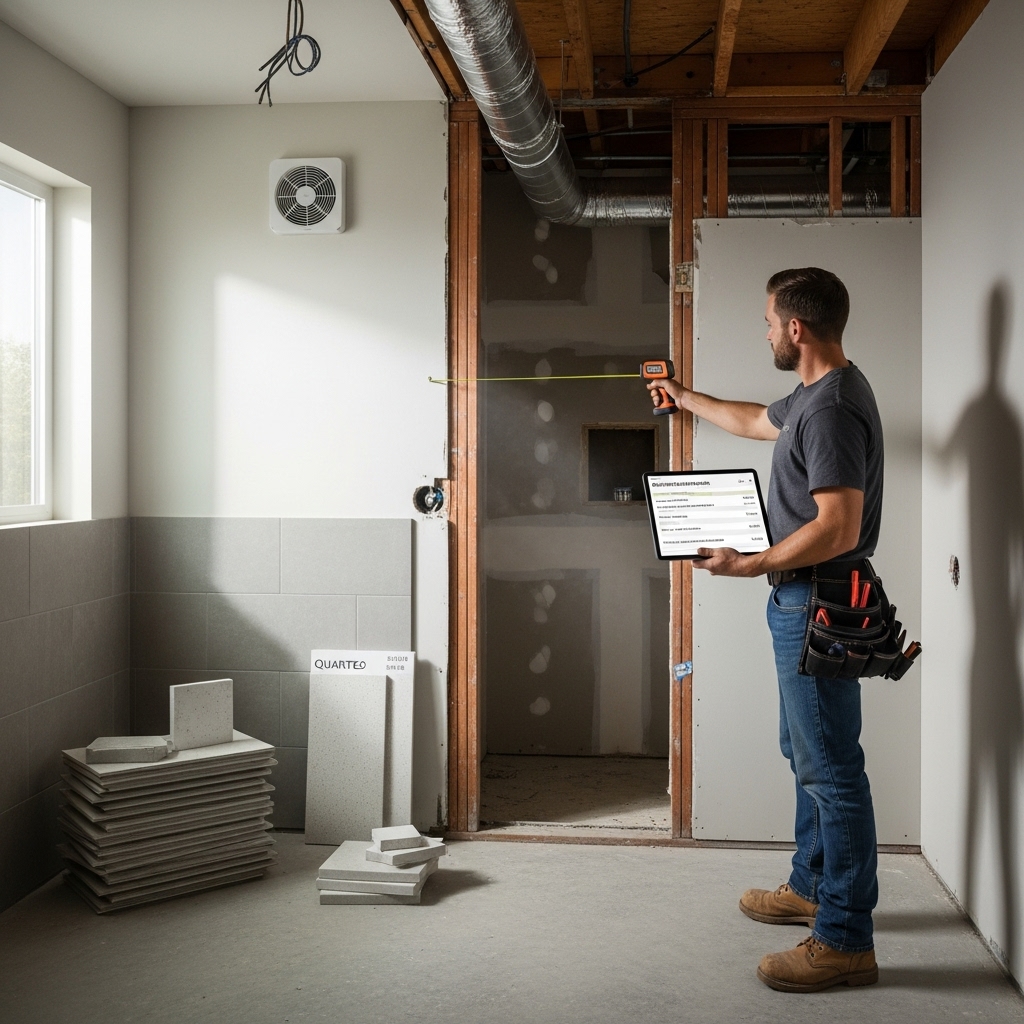
There’s a pivotal moment after rough-ins when details like niche placement, sconce spacing, and bench height should be reconfirmed. A contractor who invites you to walk the space and sign off on these details is managing risk proactively. Teams offering comprehensive bathroom remodeling services often formalize this checkpoint to ensure the next steps—tile and glass—land exactly where you intend.
Frequently Asked Questions
Why does a small powder room sometimes feel “expensive” per square foot?
Because many fixed steps—mobilization, protection, demolition, ventilation upgrades, finish work—are spread over a tiny area. The math makes the per-foot number look high even when the overall scope is modest. Evaluating scope and method gives better context.
Is per-square-foot useful for anything in bathrooms?
It can provide a rough, apples-to-oranges comparison, but it should never be your primary decision tool. Bathrooms vary too much in complexity, and the densest areas require the most skill. Scope and quality tell the real story.
What’s the best way to compare contractor proposals?
Look for detailed scopes, clear waterproofing methods, ventilation plans, and documented material selections. Ask how they handle inspections, glass lead times, and punch lists. Clarity and process consistently correlate with better outcomes.
Can I get a high-end look without overspending?
Yes. Focus on a restrained palette executed cleanly, invest in the items you touch daily—faucets, hardware, ventilation—and consider using statement materials strategically, such as an accent wall or niche. The result reads elevated without relying on every surface being premium.
Do I need permits for minor changes?
If plumbing or electrical are altered, permits are typically required. Your contractor should manage the process, coordinate inspections, and align the schedule so checkpoints don’t stall the project. Documentation also supports future resale.
How can I future-proof a bathroom without making it look clinical?
Integrate universal design elements subtly: block for future grab bars behind tile, choose lever handles, maintain generous clearances, and consider a curbless shower with understated slope. These features blend seamlessly into a modern design while enhancing usability.
If you’re ready to plan a bathroom that focuses on quality, function, and longevity rather than a simplistic average, work with a local team that understands Renton’s homes and the systems that make a bathroom perform. Start a conversation with experienced bathroom remodeling services and chart a path that turns square footage into a space you’ll love living with every day.